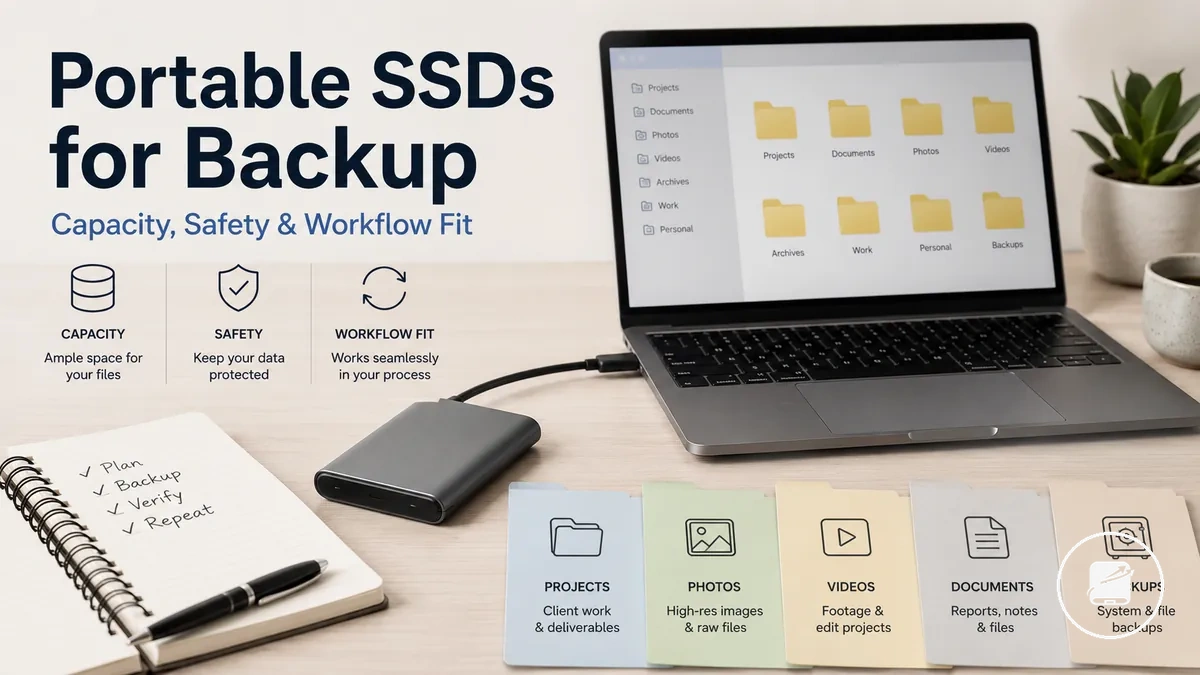
Portable SSD Backup Guide for Safe Computer Storage
A portable SSD can serve as a backup drive for local copies of computer files when its capacity covers the selected data and the drive is connected during each backup. It can support manual file copies or scheduled backups, while encryption protects stored data only when the selected drive and backup software support it. A separate copy in another location is still needed because one external drive is not a complete backup strategy. Portable SSD backup use is therefore local computer-storage support.
Portable SSD backup use is therefore local computer-storage support.
A portable SSD is a practical option when backups are run on a repeatable schedule, the drive can be connected as part of the workflow, and local restore access is required. portable SSDs used for computer backup are external storage drives that hold local backup copies through manual transfers or compatible backup software. The available backup methods are manual file copies and scheduled backups, while redundancy requires at least one additional independent copy rather than reliance on the local backup drive alone. The main fit variables are file volume, required version history, growth margin, connection habit, device compatibility, retention expectations, restore need, and risk tolerance.
These conditions lead into capacity and workflow judgment.
The main problem is that a fast external SSD can still leave files exposed when capacity is too small, scheduled backups are missed, encryption is unavailable or unused, or the drive is lost with the only extra copy. Capacity should exceed the current backup set and include growth margin, compatibility should cover the computer connector, file system, and backup software, and safety should combine encryption with redundancy and a storage case when the drive is disconnected. For example, a user who disconnects a USB-C backup drive after weekly file copies should keep another independent copy elsewhere to reduce lost-drive risk. These conditions lead into capacity and workflow judgment.
Table of Contents
How Portable SSDs Work as Backup Drives
Portable SSDs work as backup drives by storing copied files or backup sets on external storage while the drive is connected and recognised by the operating system. How portable SSDs work as backup drives is easiest to understand as a local backup process in which files move from the computer to an external device that remains available for restore.
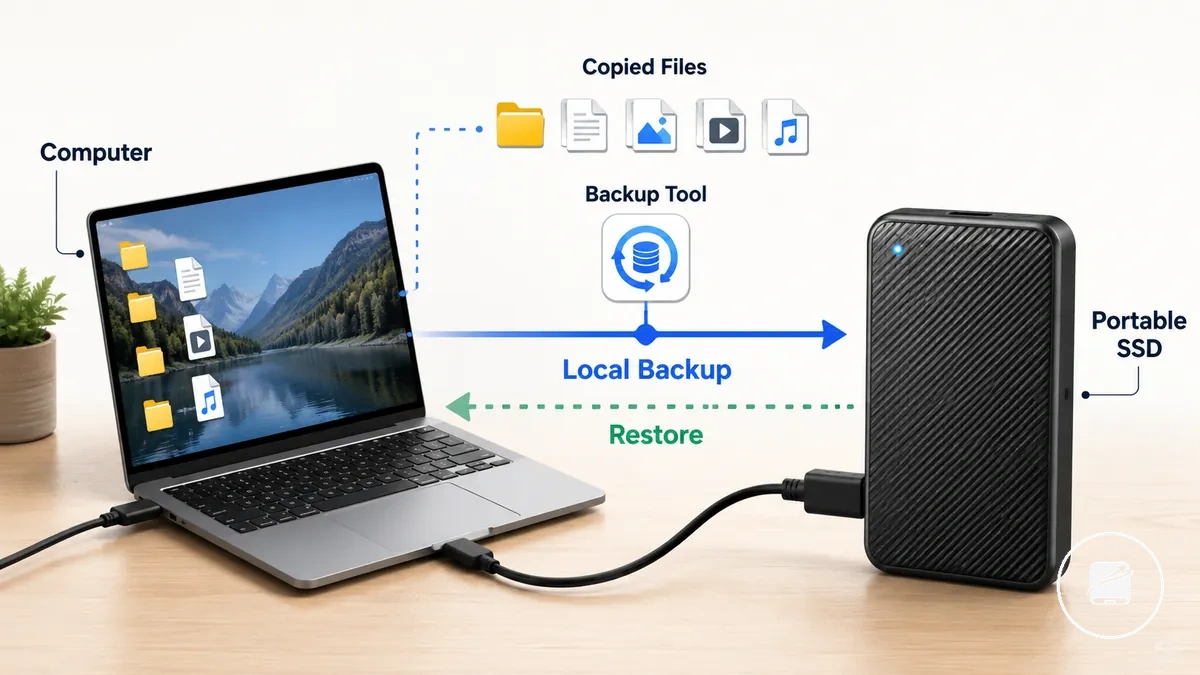
A portable SSD used for external backup functions as storage that system backup tools or manual copy operations write to and later access during a restore. According to SanDisk documentation, compatible backup software can create file backups, full system backups, or recovery media depending on the selected application and operating system. The backup-drive role depends on the connection routine, backup software, and redundancy.
- Store copied files for local backup and later restore.
- Work with compatible system backup tools while the drive remains connected and recognised.
- Provide external backup storage but not an independent second copy unless another backup location is also maintained.
A common myth is that a portable backup drive alone provides complete protection. In practice, a portable SSD remains a local backup device, and redundancy requires at least one additional independent copy to reduce the risk of data loss if both the computer and the backup drive become unavailable.
Backup Capacity Requirements for Portable SSDs
Backup capacity requirements for portable SSDs should be based on the amount of data you plan to protect rather than the drive size alone. Current file volume, retained versions, and expected growth all increase backup capacity needs, so a portable SSD should provide storage beyond the current backup size to maintain spare capacity.
For example, two users may each own a 2 TB portable SSD but require different backup capacity.
For example, two users may each own a 2 TB portable SSD but require different backup capacity. A photo library with moderate file growth and limited version history can leave storage headroom, while large video files, repeated system image backups, and longer retention settings consume capacity much faster. The comparison graphic below organizes backup capacity requirements for portable SSDs by file type and growth margin instead of suggesting a universal size.
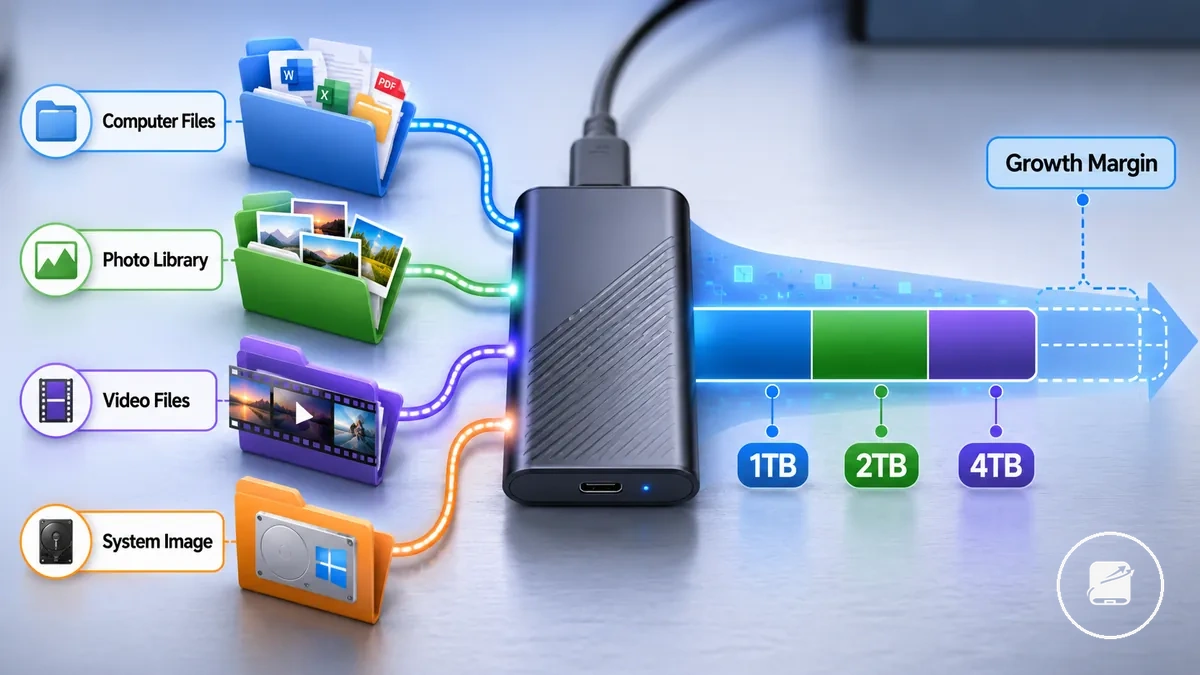
A common sizing problem is selecting a portable SSD that matches only today's data volume and leaves no room for future backups. Planning for file growth, version history, and spare capacity helps reduce the need to replace the backup drive as stored data expands. The table summarizes how common file groups affect storage demand and sizing decisions.
| File group | Capacity pressure | Growth condition | Sizing decision |
|---|---|---|---|
| Computer files | Low to medium | Regular document additions | Size above current file volume with spare capacity |
| Photo library | Medium | Continuous photo growth | Include growth margin for future collections |
| Video files | High | Large media additions | Select a higher capacity tier with storage headroom |
| System image | High | Multiple restore versions retained | Reserve space for version history and retention settings |
These criteria show that backup sizing is driven by stored data, retained versions, and future growth rather than a fixed capacity recommendation. For broader capacity planning, compare backup storage capacity using the same file-volume and growth-margin principles.
File Size, Version History, and Growth Margin
File size, version history, and growth margin determine how much backup capacity is needed beyond the current data set. Larger files require more storage, while retained versions preserve additional copies, making version history the primary factor that increases long-term backup space.
File size, version history, and growth margin determine how much backup capacity is needed beyond the current data set.
For example, a backup containing mostly documents requires less storage growth than one containing photos, videos, project files, and repeated system image backups. The annotated example below shows how file size, version history, and growth margin work together and why retained versions increase backup storage needs before the file-group criteria below.
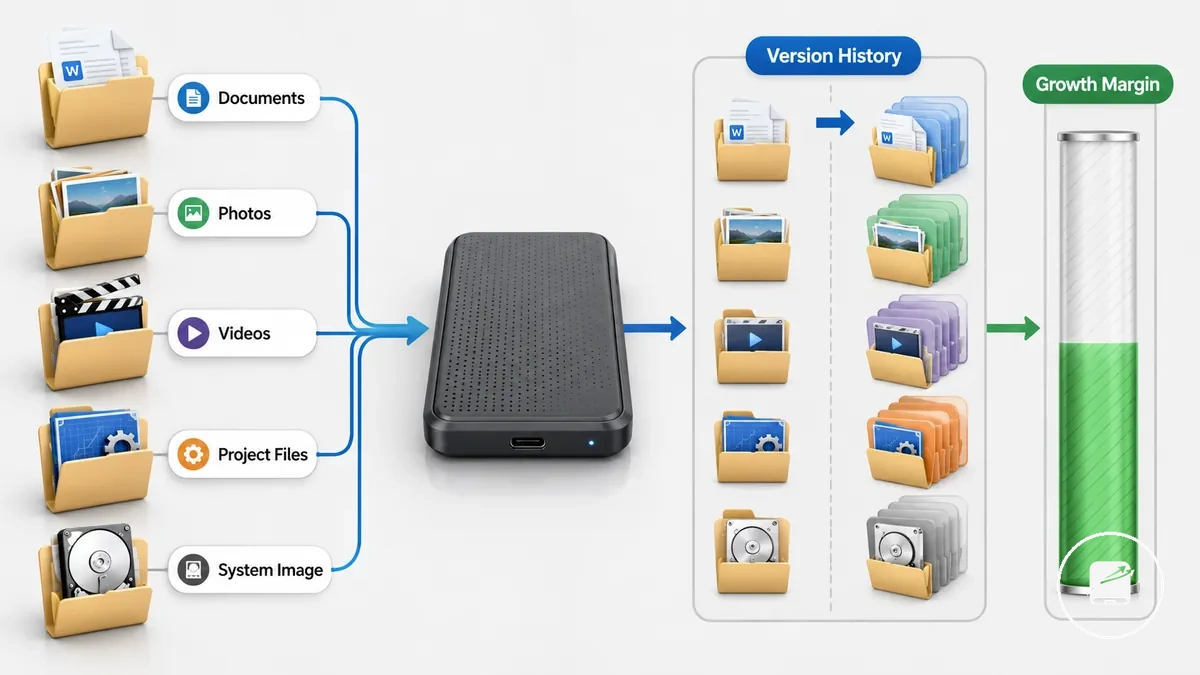
- Documents: Small files usually create lower capacity pressure, but retained versions gradually increase storage use, so free space should remain available for ongoing edits.
- Photos: A growing photo library steadily increases file volume, and keeping backup versions requires additional storage headroom over time.
- Videos: Large video files place high demand on backup capacity, while retained versions increase storage consumption with each preserved copy.
- Project files: Frequently revised project files accumulate retained versions, making growth margin important for continuous development work.
- System image: Each retained system image occupies substantial backup space, so preserving multiple recovery points requires additional spare capacity.
1TB, 2TB, 4TB, and Larger Backup Use Cases
1TB, 2TB, 4TB, and larger backup use cases provide practical capacity tiers that organize backup storage according to data volume and retention behavior. A suitable capacity tier depends on the amount of data being protected, retained versions, and expected growth, so each tier represents a conditional backup use case rather than a universal fit.
1TB, 2TB, 4TB, and larger backup use cases provide practical capacity tiers that organize backup storage according to data volume and retention behavior.
For example, a computer with mostly documents and photos may align with a 1TB backup use case, while large video collections, project files, and repeated system images can justify a 4TB or larger capacity. The comparison below shows how 1TB, 2TB, 4TB, and larger backup use cases differ by backup profile, limitation, and the upgrade trigger that commonly leads to the next capacity tier.
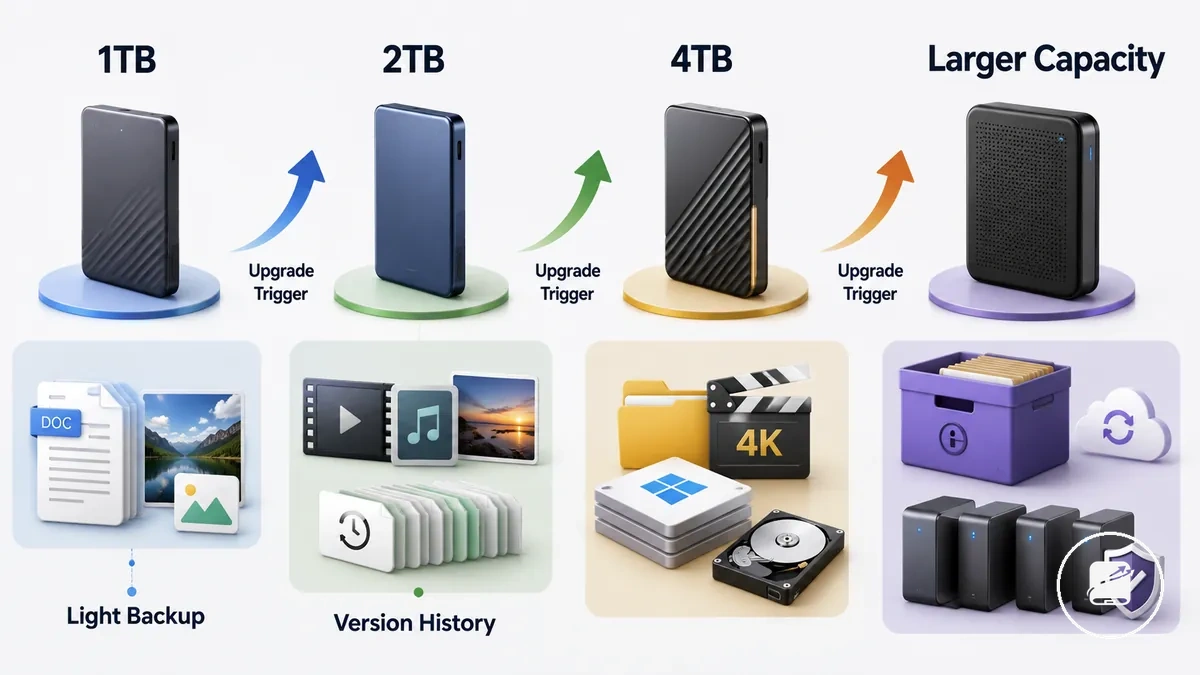
| Capacity tier | Likely backup profile | Main limitation | Upgrade trigger |
|---|---|---|---|
| 1TB | Light backup of documents, photos, and everyday personal files | Limited room for expanding media collections or extensive version history | Growing file volume or increased retained versions |
| 2TB | Mixed media library with documents, photos, videos, and moderate retention behavior | Storage margin decreases as media libraries and backup versions grow | Regular system image backups or sustained data growth |
| 4TB | Large files, multiple system images, and long-term backup growth | Large archives can gradually reduce available free capacity | Multiple devices, expanding archives, or longer retention behavior |
| Larger than 4TB | Large archive, multiple backup sources, or higher-capacity drive for extended retention | A single storage location does not provide redundancy for valuable archives | Requirement for multiple backup locations or continued archive expansion |
Very large archival requirements can extend beyond a single portable SSD, so maintaining more than one backup location provides an additional layer of protection if one storage copy becomes unavailable.
Backup Workflow Fit for Laptops and Desktops
A portable SSD fits a backup workflow when its use matches how a laptop or desktop is connected, how often backups run, and what you expect to restore later. A laptop used in different locations often benefits from a portable backup routine, while a desktop in a fixed workspace can suit a scheduled backup if the drive remains available. Backup workflow fit is therefore determined by everyday backup behavior rather than device type alone.
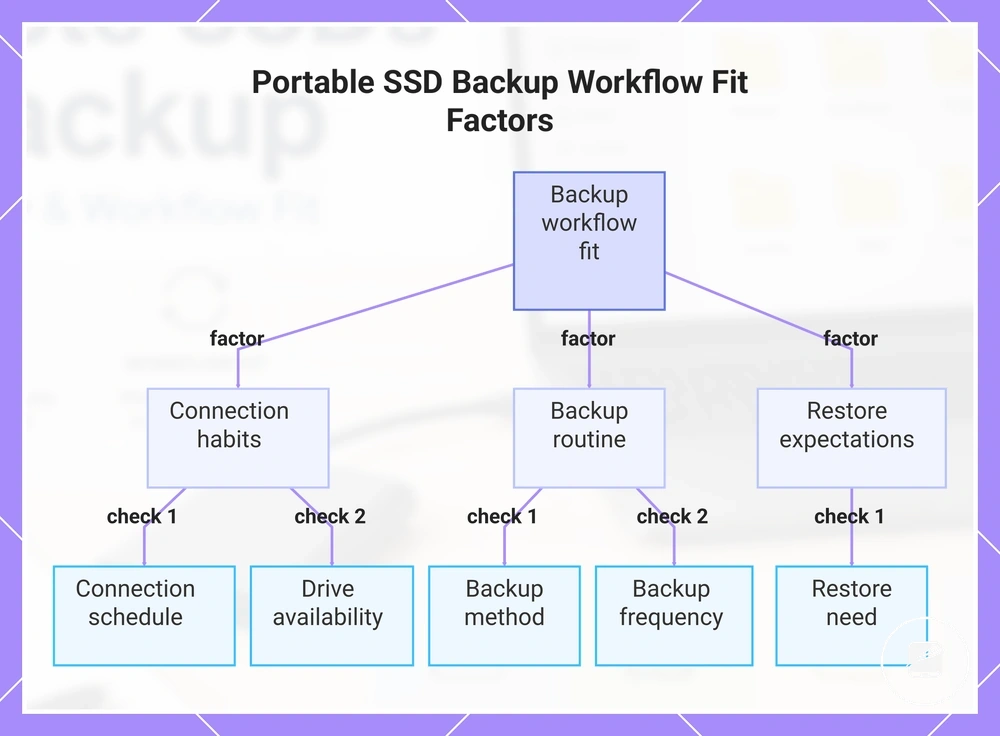
Backup workflow depends on connection habits, backup frequency, and restore expectations.
Backup workflow depends on connection habits, backup frequency, and restore expectations. The checklist below organizes the main workflow conditions that help determine whether a portable SSD matches the way you back up a laptop or desktop.
- Device type: Decide whether the portable SSD mainly supports a mobile laptop or a stationary desktop.
- Connection schedule: Consider whether the drive is connected only during manual backups or remains available for scheduled backups.
- Backup method: Choose between a manual copy of selected folders and a scheduled backup using operating system tools or backup software.
- Backup frequency: Recurring backup routines reduce the chance of missing recently changed files compared with occasional file-copy routines.
- Restore need: Match the workflow to whether you mainly recover individual files or expect to restore larger groups of data.
- Drive availability: Keep the portable SSD accessible when backups are scheduled so the backup process can run as intended.
A missing connection habit is a common reason backups become outdated. For example, a manual copy works well for occasional file transfers, but recently created or edited files are easier to miss if the portable SSD is not connected regularly. By contrast, a scheduled backup is better suited to recurring backup routines when the drive is consistently available. The most suitable backup workflow therefore reflects regular connection habits.
Backup workflow fit should also match restore expectations.
Backup workflow fit should also match restore expectations. If you mainly recover individual documents, an occasional manual copy can be appropriate, while restoring larger collections of files or a broader computer backup process is generally better supported by a recurring backup routine that keeps the drive available when scheduled backups run.
This chart shows the key factors and checks to determine whether a portable SSD fits your backup workflow based on connection habits, backup routine, and restore expectations.
This chart shows the key factors and checks to determine whether a portable SSD fits your backup workflow based on connection habits, backup routine, and restore expectations.
Manual Copies and Operating System Backup Tools
Use a manual copy when you need to preserve selected folders deliberately, and use operating system backup tools when consistency and broader restore options matter more. A manual copy creates a simple file copy of the items you choose, while a built-in backup can track a wider backup set through Windows or macOS tools. The method difference is therefore manual selection versus a repeatable backup routine.
The comparison below shows which method better matches each backup situation.
Missed-file risk rises when recently created or changed files sit outside the selected folders or are not copied before the portable SSD is disconnected. Backup software reduces that risk when the drive is available for the scheduled backup, and it can support restore options such as previous file versions or a system image where the chosen Windows or macOS feature provides them. The comparison below shows which method better matches each backup situation.
| Method | Best fit | Main risk | Restore implication |
|---|---|---|---|
| Manual copy | Occasional drag-and-drop copy of known selected folders | Higher missed-file risk when files are stored outside the chosen folders or the copy is not repeated after changes | Restores only the files and folder versions that were manually copied |
| Operating system backup tools | Recurring built-in backup on Windows or macOS when the portable SSD is available on schedule | Backups are skipped or delayed when the drive is unavailable, and coverage is limited to the selected backup settings | Can provide file-version restore options and, where the selected system tool supports it, broader recovery through a system image |
Scheduled Backups and Portable Drive Connection Habits
Scheduled backups complete only when the portable drive is connected, recognized by the operating system, and available when the backup schedule starts. Reliable connection habits therefore affect whether the backup reaches completion. The critical condition is connection timing.
The checks below balance routine availability with this storage-away habit.
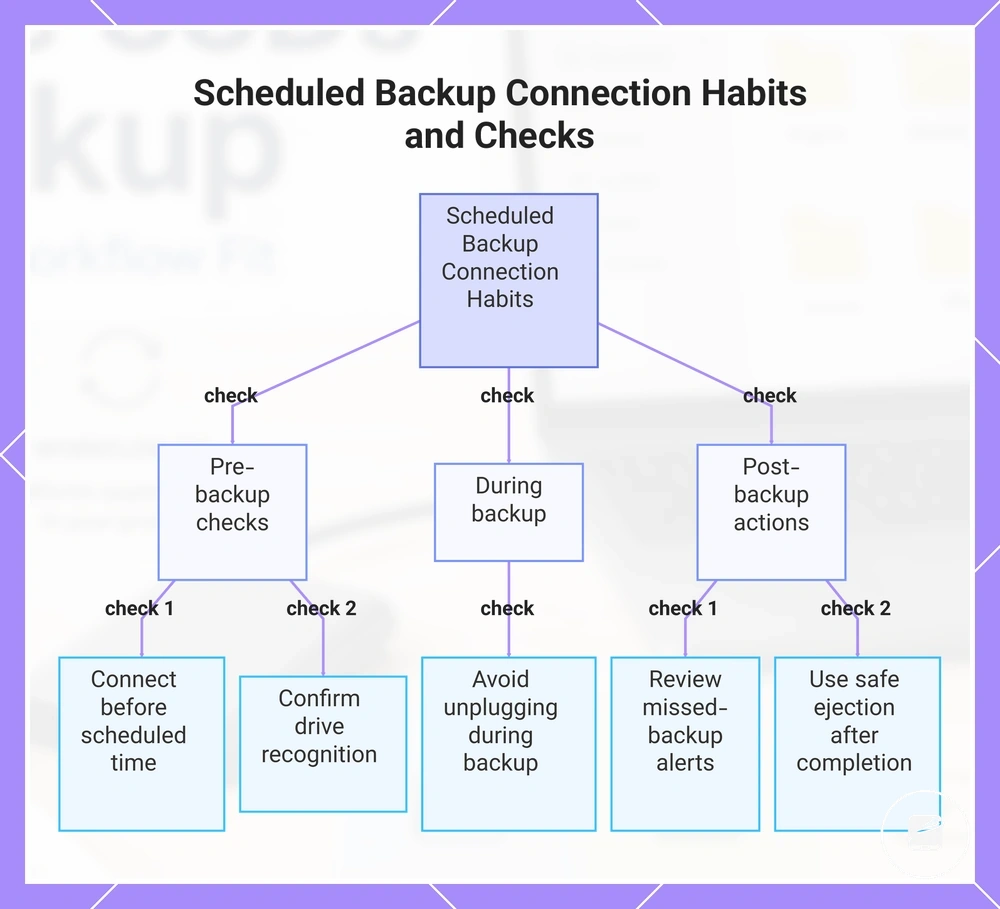
A portable SSD stored away between backups must be reconnected before the scheduled window or after a missed backup alert. For example, a drive kept in a storage case during the week will miss the scheduled backup if it remains disconnected when the task begins. The checks below balance routine availability with this storage-away habit.
- Connect before the scheduled time: Attach the portable drive before the backup window so the operating system has time to recognize it, reducing the risk of an unavailable destination.
- Confirm drive recognition: Verify that the portable SSD appears as the selected backup destination before relying on scheduled backups, reducing missed backups caused by an unrecognized drive.
- Account for sleep mode: Keep the computer awake when the selected backup tool requires an active session, reducing the chance that sleep mode postpones or interrupts completion.
- Avoid unplugging during a backup: Leave the drive connected until the backup software reports completion, reducing the risk of an incomplete backup set.
- Review missed-backup alerts: Reconnect the drive and allow the next backup to run after an alert or backup reminder, reducing gaps between completed backups.
- Use safe ejection after completion: Eject the portable drive through the operating system before unplugging it, reducing the risk of disconnecting while data is still being written.
This chart shows the essential connection habits and checks to ensure scheduled backups complete when using a portable drive.
Compatibility Conditions for Reliable Backups
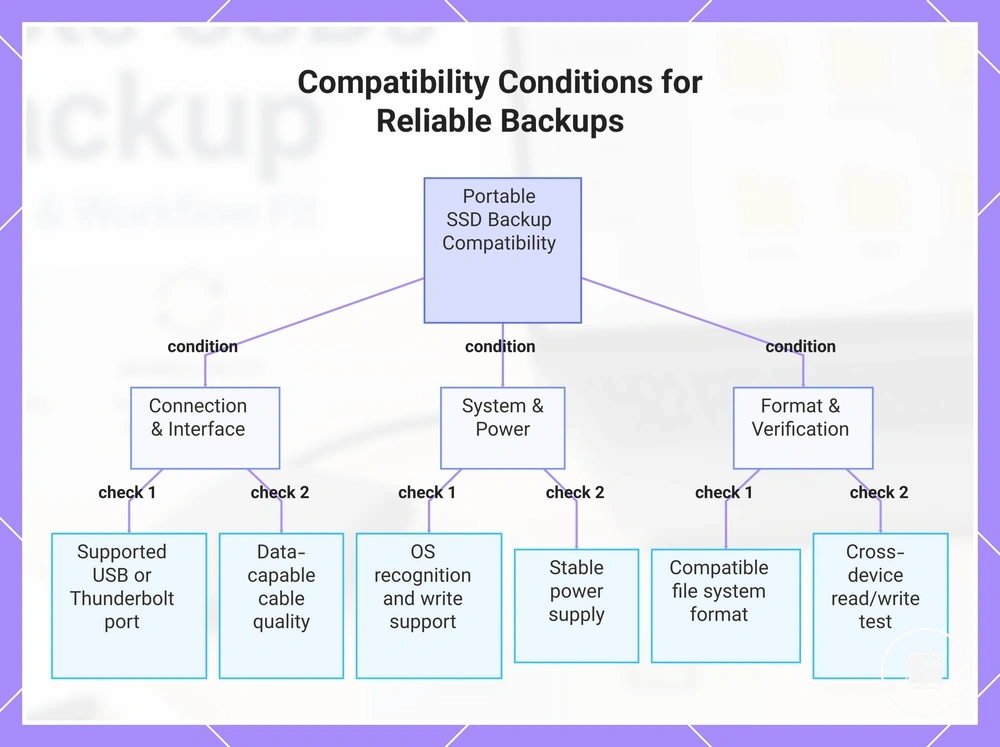
A portable SSD is compatible for reliable backups when the operating system, connection interface, cable, power source, and file system format support the same backup workflow. The drive must be recognized by the computer, connected through a supported USB or Thunderbolt port, and formatted for the devices that need access. Compatibility is therefore a reliability condition.
Compatibility is therefore a reliability condition.
Backup interruptions often begin with a mismatch rather than a storage fault. An unsupported port, a damaged or charge-only cable, unstable power, or an incompatible file system format can prevent recognition, interrupt transfer, or block cross-device access. For example, a drive formatted for one operating system may be readable but not writable on another device. Verify the device and cable conditions before relying on the backup drive.
A higher speed label does not by itself make a backup workflow reliable.
A higher speed label does not by itself make a backup workflow reliable. USB or Thunderbolt performance remains limited by the slowest supported part of the connection, while backup completion still requires stable power, suitable cable quality, operating-system support, and format compatibility. Treat the speed label as a transfer capability, not a reliability guarantee.
- Operating system: Confirm that the operating system recognizes the portable SSD and supports writing to its file system format; otherwise, the drive may appear unavailable or read-only, so choose a supported format before using it for backups.
- USB or Thunderbolt support: Match the drive interface to a supported USB or Thunderbolt port; an unsupported or adapted connection can reduce transfer reliability, so use a port that supports the required interface.
- Cable quality: Use a data-capable cable that matches the drive and port; a damaged or charge-only cable can cause failed recognition or interrupted transfers, so replace suspect cables before trusting the workflow.
- Power stability: Connect the drive to a stable port or approved powered hub; insufficient or interrupted power can stop backup completion, so avoid loose connections and underpowered hubs.
- File system format: Use a format that the intended operating system can read and write; an incompatible format can block backup creation or restoration, so select the format according to the required device access.
- Cross-device access: Test the drive on each computer that must create or restore backups; read-only or unsupported access on one device limits the shared workflow, so verify both reading and writing before regular use.
- Drive recognition: Confirm that the portable SSD appears as the selected backup destination before starting; an unrecognized or incorrectly selected drive increases the risk of a missed backup, so resolve recognition before scheduling the task.
This chart shows the key compatibility conditions that must be verified to ensure reliable portable SSD backups, organized by connection, system, and verification requirements.
USB, Thunderbolt, and Cable Limits
A portable SSD reaches its intended connection capability only when the USB-C or Thunderbolt port, cable rating, USB-A adapter, hub, and device controller support the same protocol. Practical transfer behavior is limited by the lowest-capability component. The connection path is therefore the limiting factor.
The connection path is therefore the limiting factor.
A newer SSD connected with an older cable can operate below the capability of both the drive and the port. Apple specifies that its 0.8-metre Thunderbolt 3 cable supports up to 40 Gbps for Thunderbolt 3 and up to 10 Gbps for USB 3.1 Gen 2, while its 2-metre USB-C Charge Cable supports USB 2.0 data transfer at up to 480 Mbps. In this case, the older charge cable creates the bottleneck.
| Connection factor | What to check | Possible limit | Backup effect |
|---|---|---|---|
| Port | Confirm whether the USB-C socket supports the required USB or Thunderbolt protocol and identify its port generation. | A USB-C connector can support a lower USB generation rather than Thunderbolt, so connector shape alone does not establish capability. | The port limit can reduce transfer behavior below the portable SSD's rated capability. |
| Cable | Check the cable rating for data transfer and protocol support rather than assuming that every USB-C cable has the same capability. | A charging-focused or older cable can operate at a lower data category than the port and drive. | The cable becomes a bottleneck, extending backup transfers without indicating an SSD fault. |
| USB-A adapter | Verify that the USB-A adapter supports data transfer, the required USB generation, and a stable connection. | An adapter designed for an older USB generation limits the connection path to that lower category. | The backup can complete at reduced speed, while an unstable adapter connection can interrupt transfer reliability. |
| Hub | Confirm that the hub supports the required protocol, data rating, and stable power for the portable SSD. | Shared bandwidth, lower-rated ports, or unstable power can constrain the connection. | Backup speed can decrease when other devices share the hub, and power interruption can stop completion. |
| Device controller | Check the computer's controller and operating-system support for the selected USB or Thunderbolt mode. | The controller limits the connection to the highest protocol it supports, even when the cable and SSD support a newer standard. | The controller ceiling sets the available transfer category for the backup workflow. |
| File mix | Identify whether the backup contains a few large files or many small files. | Protocol ratings describe connection capacity, while file mix and storage overhead can reduce observed transfer behavior. | Two backups using the same connection path can complete at different rates without indicating a compatibility failure. |
File System Format and Cross-Device Backup Access
A portable SSD supports cross-device access when its file system format matches the operating systems and backup tools that must read from and write to the drive. APFS commonly fits macOS-focused workflows, NTFS commonly fits Windows-focused workflows, and exFAT supports native cross-platform access between Windows and macOS with fewer file-system features. The format is therefore the access condition.
The format is therefore the access condition.
A mismatched drive format can leave a backup readable but not writable, or prevent a backup tool from selecting the SSD. Check the backup-tool requirements, operating-system write access, and file-size support before active backup use. Reformatting erases existing data, so copy any required files elsewhere before changing the format.
See formatting for backups for clarification after choosing the required access pattern.
See formatting for backups for clarification after choosing the required access pattern.
| Format | Common fit | Limitation | Backup access effect |
|---|---|---|---|
| APFS | macOS backup workflows and backup tools that require an Apple file system. | Windows does not provide native APFS read-and-write access. | APFS supports macOS-focused backup access but restricts direct cross-device access from Windows unless compatible additional software is used. |
| NTFS | Windows backup workflows that require native read-and-write access, large-file support, permissions, and journaling. | macOS commonly provides native read access to NTFS without native write access. | NTFS supports Windows-focused backups but can prevent macOS from writing new backup data unless compatible additional software is used. |
| exFAT | Manual or application-supported backups that require native read-and-write access across Windows and macOS, including large files. | exFAT does not provide the journaling, permissions, or native backup-tool integration available with APFS or NTFS. | exFAT improves cross-platform access, but a backup tool that requires APFS or NTFS can reject the drive. |
Backup Safety Limits for Portable SSD Storage
Backup safety improves when portable SSD storage is one copy within a broader strategy rather than the only copy. Redundancy, encryption, storage habits, and recovery expectations determine which risks remain. A portable SSD reduces local backup risk but retains the safety limit of a single-copy backup.
Off-device retention keeps a second copy outside the affected device or location.
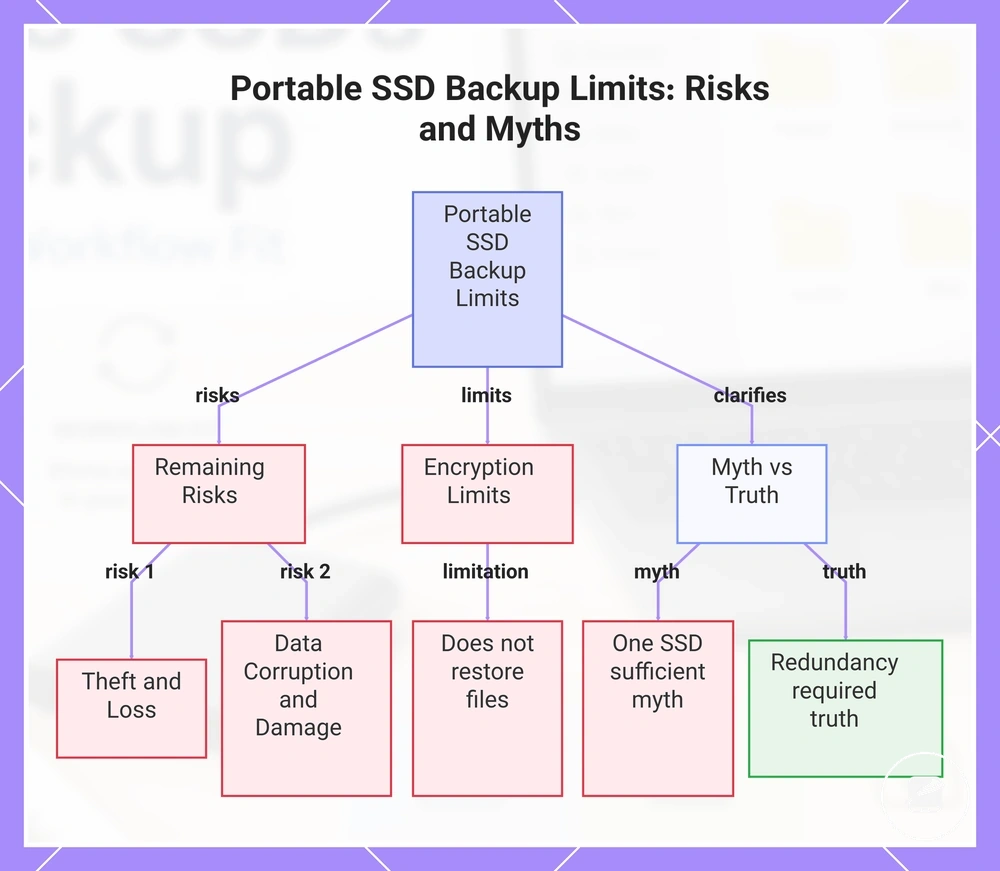
Theft, loss, accidental deletion, corruption, and physical damage can still make files unavailable when every copy is stored on the same device. Encryption limits access to data on a lost drive, but it does not restore deleted or corrupted files. Off-device retention keeps a second copy outside the affected device or location. This separation provides redundancy.
Encryption limits access to data on a lost drive, but it does not restore deleted or corrupted files.
The risk checklist below shows what a portable SSD can help with and which protection still requires another control.
- Theft: Encryption can restrict access to files on the stolen SSD, but it does not recover the missing backup.
- Loss: The SSD provides a portable local copy, but losing the drive removes that copy unless the data also exists elsewhere.
- Accidental deletion: The SSD can restore a deleted file only when an unaffected backup version remains available.
- Corruption: The SSD can preserve a healthy copy, but corruption copied into the only backup leaves no independent recovery source.
- Physical damage: The SSD separates backup data from the computer, but damage to both devices in the same location can remove both copies.
- Single-copy risk: One SSD creates one recovery source; an off-device second copy reduces the risk that one event removes every available copy.
Myth: encryption, transfer speed, or a durable enclosure makes one portable SSD a sufficient backup strategy. Truth: these features improve access protection, backup speed, or handling resilience, while redundancy and off-device retention determine whether another copy remains recoverable. A fast external drive improves local convenience, not full backup safety.
A fast external drive improves local convenience, not full backup safety.
Guidance on backup data safety clarifies the boundary between protecting access to stored files and retaining independent copies for recovery.
This chart shows the remaining risks, encryption limitations, and common myths about using a portable SSD as a backup solution.
This chart shows the remaining risks, encryption limitations, and common myths about using a portable SSD as a backup solution.
Encryption, Password Protection, and Lost-Drive Risk
Encryption and password protection reduce exposure when a backup SSD is lost or stolen by restricting unauthorised access to stored files. These security features protect access rather than guarantee recoverability. Their primary benefit is access protection.
These security features protect access rather than guarantee recoverability.
A forgotten password or missing recovery key can prevent the owner from unlocking an encrypted backup SSD even when the drive remains functional. Hardware encryption, software encryption, passwords, and biometric access each provide an unlock method, but none replaces a separate backup copy if files are deleted, the drive fails, or the recovery key is unavailable. For example, a user who stores the only recovery key on the encrypted SSD can permanently lose access after a password reset, making recovery-key risk an important safety consideration.
The checklist below compares common security methods with the remaining risks they do not remove.
The checklist below compares common security methods with the remaining risks they do not remove.
- Hardware encryption: Protects stored data through drive-based encryption, but it does not recover files after hardware failure or replace a separate backup copy.
- Software encryption: Protects file access with operating-system or application encryption, but deleted or corrupted data still requires another recoverable copy.
- Password protection: Restricts unauthorised access to the drive, but a forgotten password can lock out the owner unless a recovery key or another approved recovery method is available.
- Biometric access: Provides a convenient unlock method on supported devices, but it still relies on the underlying encryption system and does not prevent data loss or remove the need for a separate backup copy.
Long-Term Retention and Single-Drive Backup Risk
Long-term retention is more reliable when a portable SSD is one copy within a broader retention plan rather than the only backup location. Copy count, storage environment, and a regular verification habit determine whether stored files remain available over time. Treating one portable SSD as the only backup creates single-drive backup risk.
Treating one portable SSD as the only backup creates single-drive backup risk.
A short-term convenience backup can become an outdated backup when the drive remains disconnected and new files or revisions are not copied. For example, a portable SSD stored away for months may still contain an older file set, while accidental overwrite can remove the only retained version if no separate copy exists. A periodic restore check confirms that selected files remain readable and turns backup verification into an active verification habit.
A periodic restore check confirms that selected files remain readable and turns backup verification into an active verification habit.
The risk matrix below organises the main long-term retention conditions, the check that reveals each problem, and the safer decision that reduces the related limitation.
| Risk | Condition | Check | Safer decision |
|---|---|---|---|
| Single-drive failure | One portable SSD holds the only backup copy. | Confirm whether another independent copy exists on a different device or location. | Maintain more than one verified copy so one drive failure does not remove every backup. |
| Outdated backup | Disconnected storage has not received recent files or revisions. | Compare the backup date and file set with the current source data. | Reconnect the drive on a defined schedule and update the retained copy. |
| Accidental overwrite | A newer copy replaces the only older version. | Review the destination and retained versions before copying or synchronising files. | Keep at least one earlier version outside the overwrite path. |
| Unreadable backup | The stored files have not been opened or restored since the backup was created. | Perform a restore check by opening selected files from the backup location. | Repeat backup verification periodically and retain another readable copy. |
Choosing a Portable SSD for Backup Use
Choosing a portable SSD for backup use starts with backup-specific criteria rather than headline speed. Capacity, reliability, compatibility, security, durability, and value determine whether the drive fits the intended routine. These are the essential backup-specific criteria.
This decision balances capacity and reliability.
Large file collections become difficult to protect when the selected capacity leaves no practical room for new data or updated copies. Select capacity by combining the current data set with expected growth, and treat sustained transfer as the ability to maintain useful copy performance during extended backup jobs rather than as a peak-speed claim. Warranty context describes the manufacturer's stated support period, but it does not replace an additional backup copy or prove long-term retention. This decision balances capacity and reliability.
This scenario prioritises security and durability.
If the portable SSD will move between a desk, bag, and another location, handling conditions should shape the selection. Enclosure durability is more relevant for frequent transport, while a storage case reduces exposure to scratches, dust, and routine impact during storage. Encryption support is an essential security criterion when lost-drive risk includes unauthorised access to sensitive files, whereas cosmetic enclosure features are optional. This scenario prioritises security and durability.
A higher advertised transfer rate does not automatically make a portable SSD more suitable for backup use.
A higher advertised transfer rate does not automatically make a portable SSD more suitable for backup use. The drive must first provide cable fit for the computer's connector, compatible file access for the intended devices, adequate capacity, and stable sustained transfer for the backup workflow. Peak speed remains secondary to fit.
| Criterion | Backup condition | Why it matters | Selection signal |
|---|---|---|---|
| Capacity | The stored data set is expected to grow after the first backup. | Insufficient free space limits future copies and version retention. | Essential: choose capacity that covers current data and leaves room for expected growth. |
| Compatibility | The drive must connect to and exchange files with the intended computers. | A mismatched connector, cable, or file system interrupts the backup and restore workflow. | Essential: confirm port type, cable fit, operating-system support, and required file access before selection. |
| Security | The portable SSD may contain sensitive files or leave the primary location. | Encryption support restricts access if the drive is lost, although it does not replace another backup copy. | Essential for sensitive data: select hardware or software encryption support with a recoverable access method. |
| Durability | The drive will be transported or handled frequently. | A robust enclosure reduces exposure to routine handling damage. | Essential for mobile use; less critical for a drive that remains in protected desk storage. |
| Transfer behavior | Backup jobs involve large or repeated file copies. | Stable sustained transfer shortens extended copy sessions more consistently than peak-speed figures alone. | Essential for large backup jobs: prioritise documented sustained behavior and workflow fit over maximum advertised speed. |
| Storage case | The drive travels in a bag or remains stored between backup sessions. | A case reduces exposure to dust, scratches, loose cables, and minor handling impacts. | Useful rather than universal: include a storage case when the handling routine creates those risks. |
Choose the portable SSD that satisfies every essential condition before comparing optional features or price differences. The final trade-off should favour adequate capacity, verified compatibility, suitable security, handling durability, sustained transfer for the expected workload, and a storage case where the routine requires one.
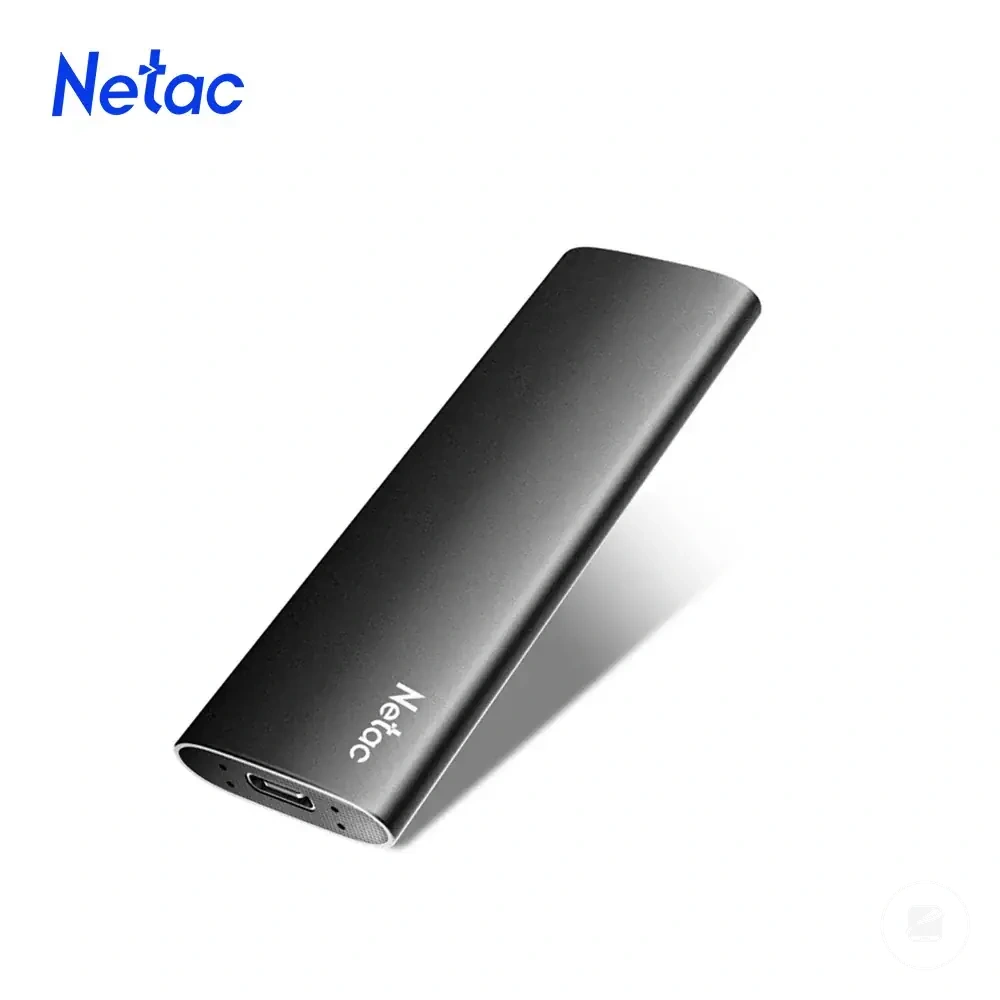
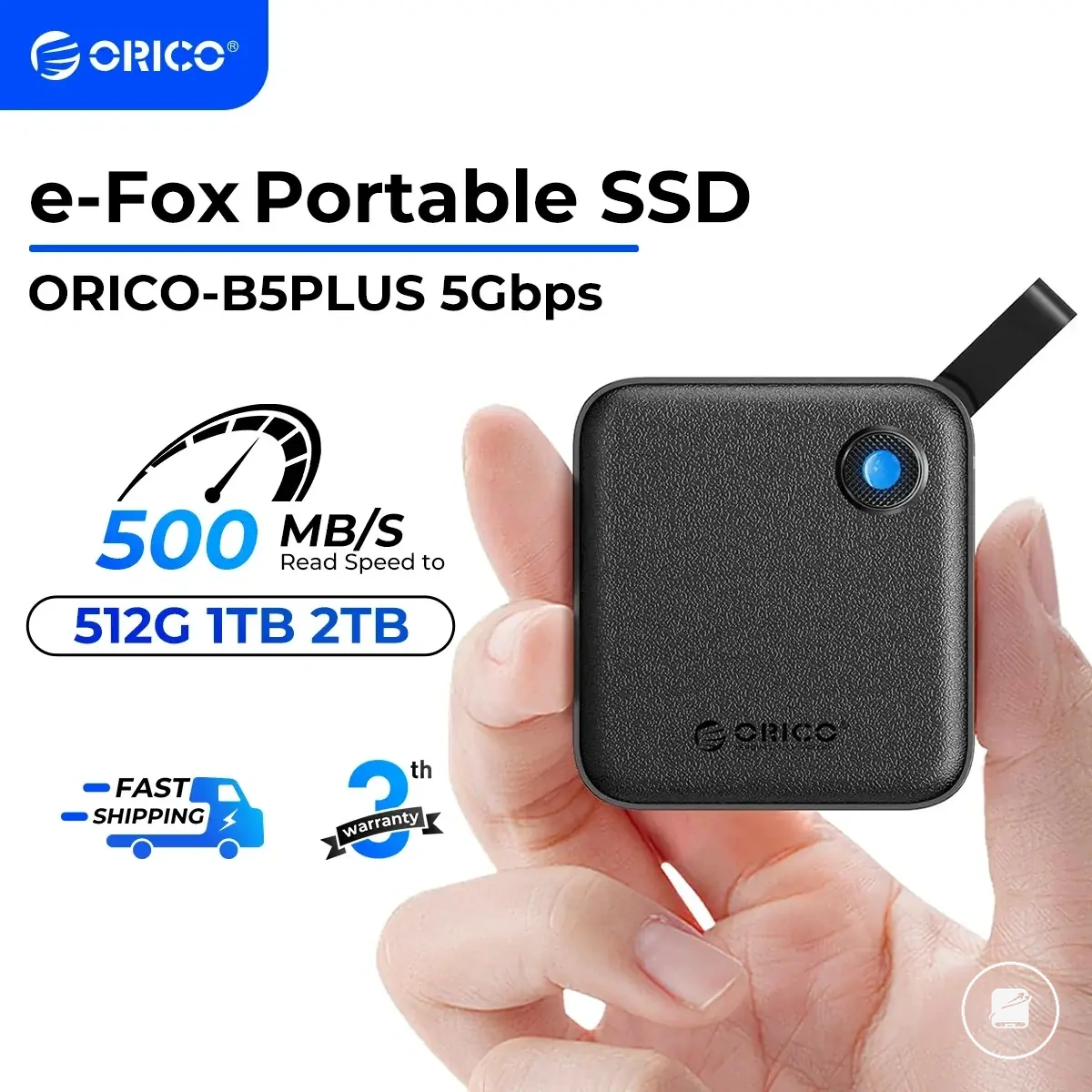
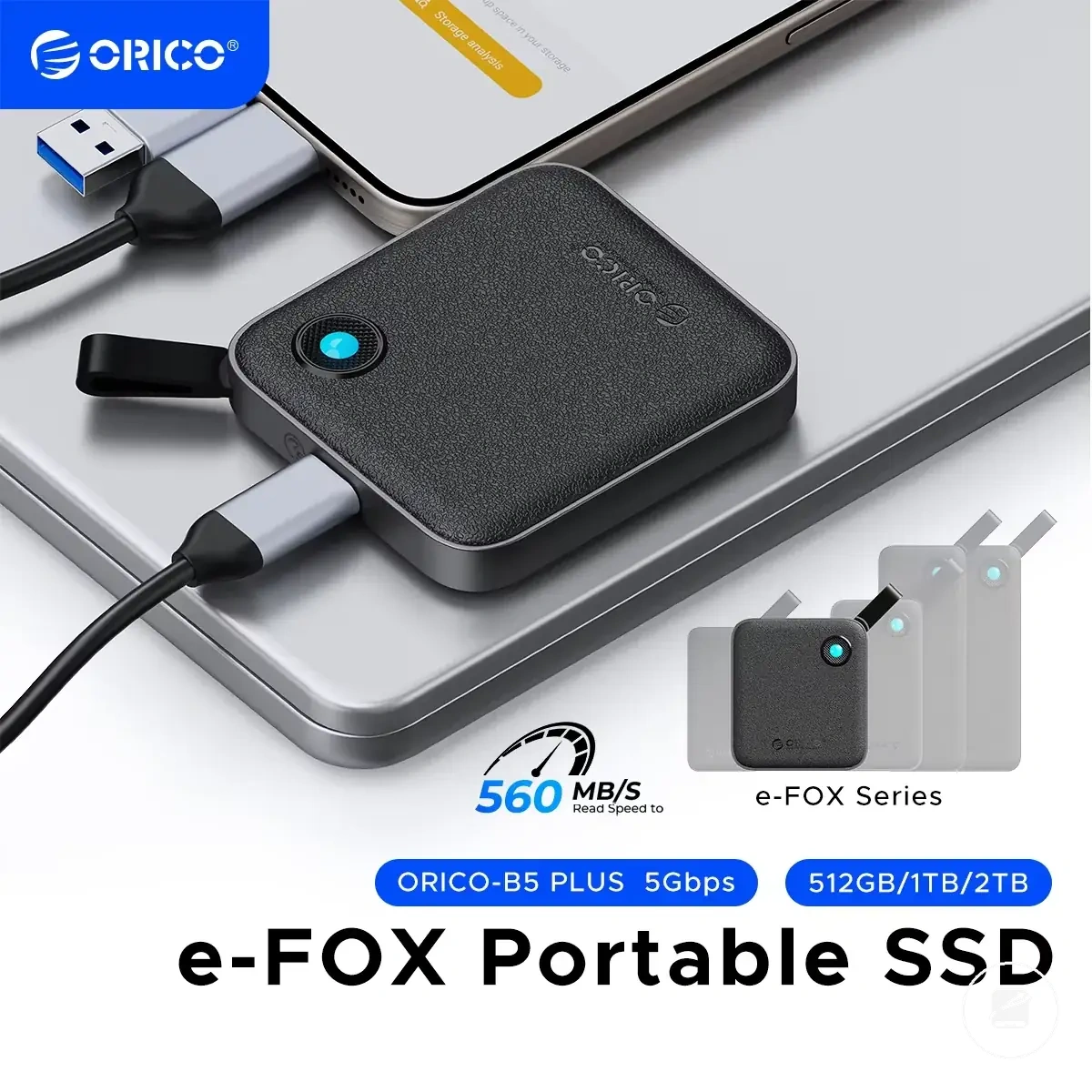
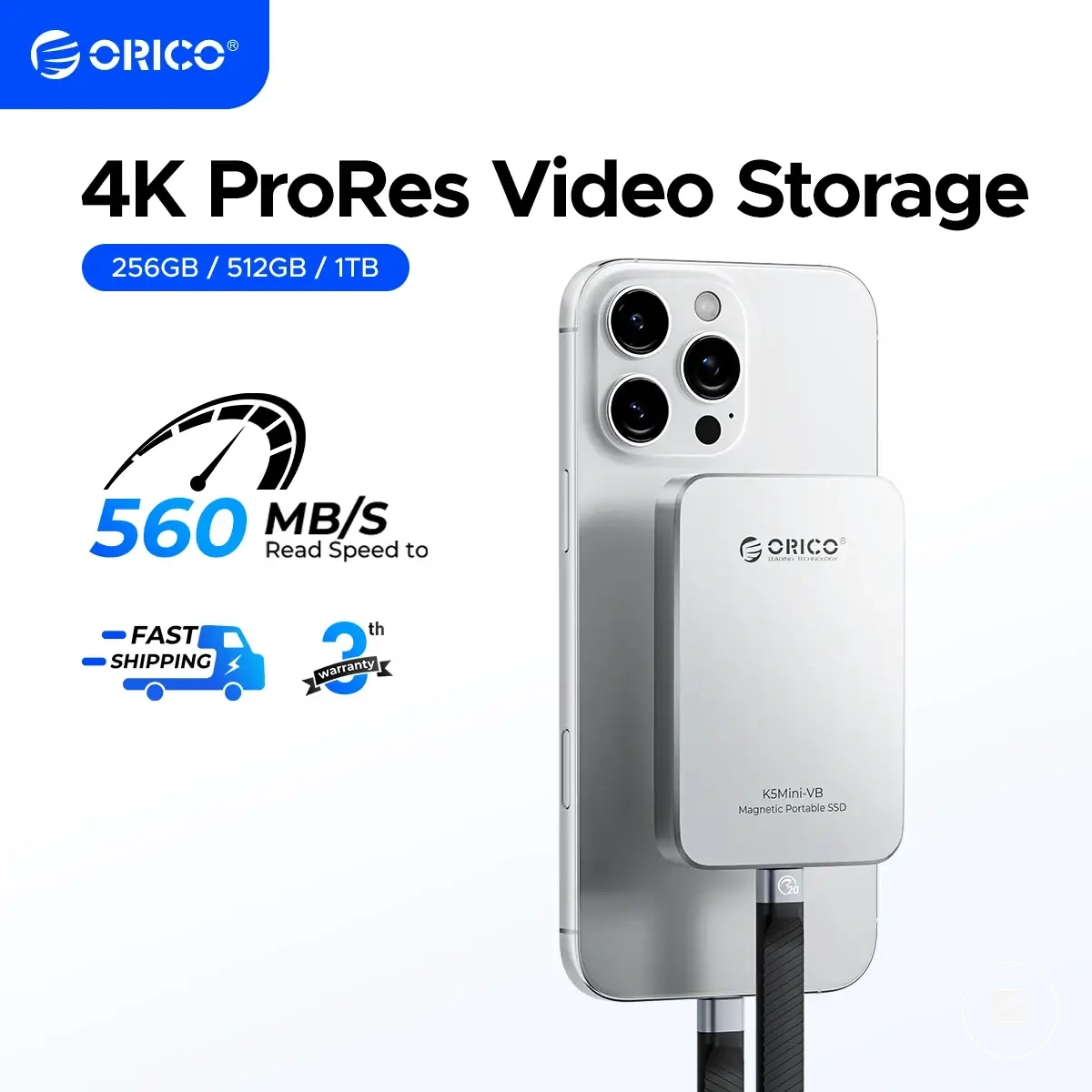
Here are product examples that may make comparison easier.
Here are product examples that may make comparison easier. Before buying, always review the compatibility criteria, essential features, and product details.

Capacity, Durability, Security, and Speed Priorities
Capacity has the highest backup relevance because a portable SSD must hold the current file volume and leave room for expected growth. Security and durability carry the next-highest criteria weight when sensitive data, lost-drive risk, or frequent handling affects the routine. The priority order is capacity first, security and durability second, then sustained speed and supporting protection features.
These speed priorities and protection needs change with file volume, access risk, handling, and use-case variation.
For office documents, adequate capacity and encryption usually have a stronger decision effect than maximum transfer performance; media libraries place more weight on capacity and sustained speed, while whole-computer backup routines require both sufficient space and stable long-copy behaviour. A desk-based routine gives case protection less weight than frequent travel, and heat tolerance matters more during repeated extended transfers than during occasional small copies. These speed priorities and protection needs change with file volume, access risk, handling, and use-case variation.
- Highest priority — Capacity: Choose space that covers the existing file volume and leaves room for expected growth; insufficient capacity prevents new copies or reduces retained version history.
- High priority — Security: Prioritise encryption when the drive contains sensitive data or leaves a controlled location; the backup effect is lower unauthorised-access risk if the portable SSD is lost.
- High priority for mobile use — Durability: Give enclosure strength more weight when the drive is transported frequently; the decision effect is lower exposure to routine handling damage.
- Medium to high priority — Sustained speed: Prioritise stable transfer behaviour for media libraries and whole-computer backups; the backup effect is more consistent completion of extended copy jobs than peak speed alone provides.
- Medium priority — Cable quality: Select a cable that matches the drive and computer interfaces and maintains a secure connection; the decision effect is fewer interruptions during backup and restore workflows.
- Conditional priority — Heat tolerance: Give thermal behaviour more weight when backups involve long or repeated transfers; the backup effect is less performance reduction during sustained workloads.
- Conditional priority — Case protection: Use a storage case when the drive travels in a bag or remains stored between sessions; the decision effect is lower exposure to dust, scratches, loose cables, and minor impacts.
When a Hard Drive or Cloud Backup May Still Be Needed
A portable SSD may need to be paired with or replaced by another backup alternative when cost, capacity, accessibility, or redundancy matters more than portability and fast local transfers. An external hard drive suits larger local copies at a lower cost per unit of capacity, NAS-like local storage supports shared access across multiple devices, and cloud backup provides an off-site backup location through an internet connection. Pair or replace the portable SSD according to the required storage volume, access method, and number of independent copies.
Pair or replace the portable SSD according to the required storage volume, access method, and number of independent copies.
For example, office documents that must remain accessible away from the main computer may suit cloud backup, while a large media library or whole-computer image may place greater weight on an external hard drive or NAS-like local storage. A portable SSD can still serve as the fast local copy, but a second backup location protects against risks that affect one device or one site. Redundancy is the deciding factor because multiple backup locations reduce single-copy risk more effectively than relying on one faster drive.
| Option | Backup strength | Limitation | When to pair or use instead |
|---|---|---|---|
| Portable SSD | Fast local backup and restore with compact, removable storage. | Capacity usually costs more than comparable external hard drive storage, and one device remains a single backup location. | Use for frequent local copies or pair with another location when important data requires redundancy. |
| External hard drive | Provides higher local capacity at a lower cost per unit of storage than many portable SSD options. | Transfer speed is generally lower, and mechanical parts make handling risk more relevant during operation. | Use instead when large media libraries or whole-computer backups make capacity and cost the main decision criteria. |
| NAS-like local storage | Creates a shared local storage destination for multiple computers on the same network. | Access outside the local network requires additional configuration, and the hardware remains exposed to site-level risks. | Pair with a portable SSD when several devices need one local backup location or scheduled local copies are part of the routine. |
| Cloud backup | Adds off-site redundancy and remote accessibility when an internet connection is available. | Backup and restore speed is limited by internet bandwidth, and recurring service cost may apply. | Use as a secondary backup for important files or instead of local storage when remote access and off-site protection have higher priority. |
Portable SSD Backup Checklist Before Purchase
A portable SSD backup checklist before purchase should verify capacity, compatibility, safety, and routine reliability rather than transfer speed alone. The drive should hold the current file volume with a growth margin, connect to the intended devices, protect sensitive data where required, and support a repeatable backup routine. Complete these checks as the final purchase verification.
Complete these checks as the final purchase verification.
A fast drive can still be unsuitable if its required capacity is too low, its cable or port does not match the computer, or it becomes the only copy of important files. The verification list below converts those risks into clear pause-or-proceed decisions.
- Verify that the required capacity covers the current file volume and expected growth margin; decision signal: pause if routine backups would leave little room for new files or retained versions.
- Confirm operating system fit for every computer that must create, read, or restore the backup; decision signal: pause if the intended format or software will not support those devices.
- Check the cable match between the portable SSD and the supplied or planned connection; decision signal: pause if an adapter or replacement cable is required for normal use.
- Check the port match on each computer that will use the drive; decision signal: pause if the available port prevents connection or limits the intended transfer routine.
- Assess the encryption need against the lost-drive risk and sensitivity of the stored files; decision signal: pause if confidential data would remain readable after the drive is lost.
- Confirm protective storage for transport and periods between backups; decision signal: pause if the drive and cable would remain exposed to avoidable impact, dust, or loose storage.
- Set a backup schedule that matches how often important files change; decision signal: pause if the routine is too inconvenient to follow consistently.
- Verify a secondary-copy plan in another backup location, such as an external hard drive, local storage system, or cloud backup; decision signal: pause if the portable SSD would hold the only copy of important data.
Backup Drive Care After Setup
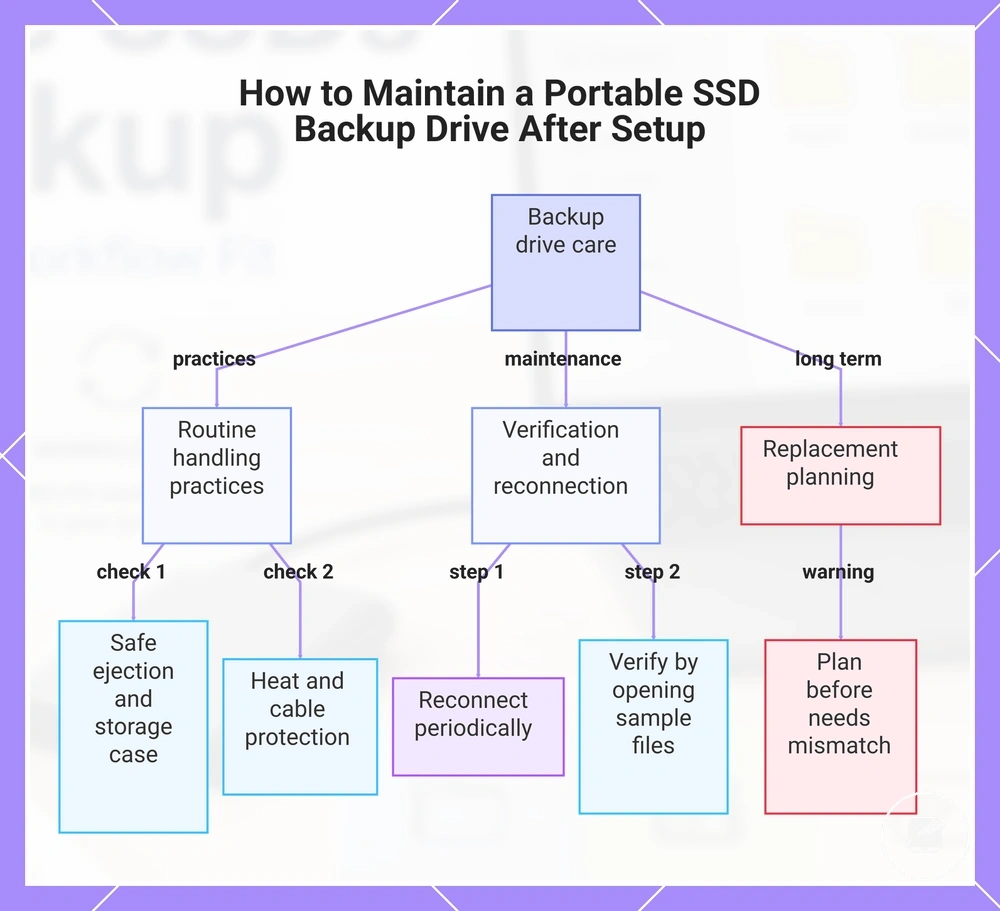
Backup drive care keeps a portable SSD dependable after it becomes part of a backup routine. A consistent portable SSD maintenance routine helps preserve readable current backups, reduces avoidable handling problems, and supports routine reliability. Treat backup drive care as an ongoing habit rather than a one-time setup task.
Treat backup drive care as an ongoing habit rather than a one-time setup task.
Missed maintenance can leave current backups outdated or difficult to restore even when the drive appears to work normally. Use safe ejection before disconnecting the drive, keep it in a storage case when not in use, avoid unnecessary heat exposure, and protect the cable from sharp bends or excessive strain. These routine practices support safe handling and reduce avoidable wear during everyday use.
These routine practices support safe handling and reduce avoidable wear during everyday use.
When a portable SSD remains disconnected for extended periods, reconnect it periodically to create current backups and perform backup verification by opening a sample of saved files. For example, restoring a few documents or photos confirms that the backup remains readable instead of assuming every copy is usable. This simple check helps verify that the backup routine continues to produce current, readable backups.
- Use safe ejection before disconnecting the drive so completed write operations are not interrupted.
- Store the portable SSD in a storage case when it is not in use to improve physical protection during transport and storage.
- Avoid unnecessary heat exposure to support stable operating and storage conditions.
- Protect the cable by avoiding tight bends, crushing, or repeated strain to maintain reliable connections.
- Reconnect the drive periodically so current backups remain up to date and available when needed.
- Perform backup verification by opening representative files to confirm that backups remain readable.
Replacement planning should begin when storage capacity, connection needs, or acceptable risk no longer match the backup routine, rather than waiting for drive failure. For broader long-term care guidance, see portable SSD maintenance. Plan replacement before the existing drive becomes the weakest point in the backup strategy.
For broader long-term care guidance, see portable SSD maintenance .
Here are product examples that may make comparison easier. Before buying, always review the compatibility criteria, essential features, and product details.
This chart shows the routine handling practices, verification steps, and replacement planning for maintaining a portable SSD backup drive after setup.